



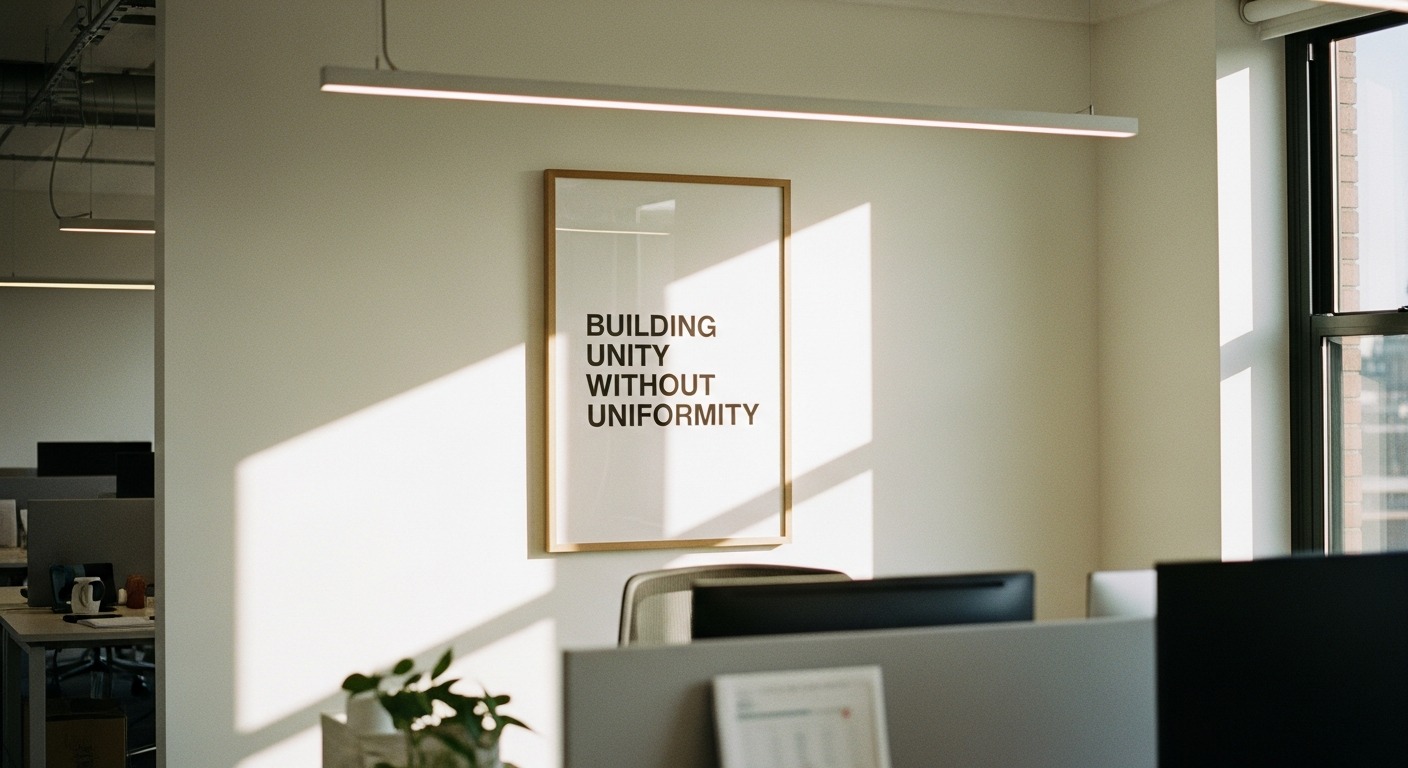
How HR can foster collaboration and respect without forcing sameness
In today’s workplace, unity is often misunderstood. It’s not about everyone thinking alike, working the same way, or agreeing on every issue. True unity is about creating an environment where people with different perspectives, backgrounds, and working styles can collaborate effectively and feel respected while doing so.
For HR leaders, the challenge is clear: how do you build cohesion without erasing individuality? The answer lies in shared purpose, clear expectations, and a culture rooted in mutual respect—not conformity.
Why Unity Matters—Especially Now
Organizations today are navigating complexity on every front—hybrid work, generational differences, evolving technologies, and shifting expectations. Without a sense of unity, teams fragment. Silos grow. Trust weakens.
Unity gives teams something stable to anchor to. It helps employees stay connected even when they disagree or approach work differently. And importantly, unity strengthens performance by reducing friction and fostering collaboration.
The Risk of Confusing Unity with Sameness
When organizations try to force unity, they often unintentionally push conformity. Employees may feel pressure to suppress ideas, avoid difficult conversations, or “fit the mold” to succeed.
This kind of environment discourages innovation and honest dialogue. People stop bringing their full selves to work—not because they don’t care, but because it doesn’t feel safe to be different.
HR plays a critical role in preventing this by reinforcing that alignment does not require agreement, and respect does not require uniformity.
How HR Can Foster Healthy Unity
Unity is built through clarity and consistency. HR can help teams align around shared goals, values, and behavioral expectations while leaving room for diverse viewpoints and working styles.
This includes:
-
Setting clear norms around respectful communication
-
Encouraging collaboration without mandating identical approaches
-
Helping managers navigate differences constructively rather than avoid them
When expectations are clear, diversity becomes an asset instead of a source of tension.
Creating Space for Difference Without Division
Healthy teams allow disagreement without letting it turn into conflict. HR can support this by helping managers facilitate conversations where different perspectives are acknowledged and explored, not dismissed.
Training leaders to listen actively, ask better questions, and model curiosity over defensiveness creates space for productive dialogue. Over time, employees learn that they don’t have to agree to work well together—they just have to respect one another.
Final Thought
Unity doesn’t come from sameness—it comes from shared commitment. When HR helps build cultures rooted in purpose, clarity, and mutual respect, teams grow stronger precisely because of their differences.
Because the most resilient workplaces aren’t those where everyone thinks alike—they’re the ones where everyone belongs.
Share:
Giving Employees a Voice: Why Listening Is a Leadership Responsibility
Spring Forward, Don’t Burn Out: Helping Employees Adjust to Time Change