



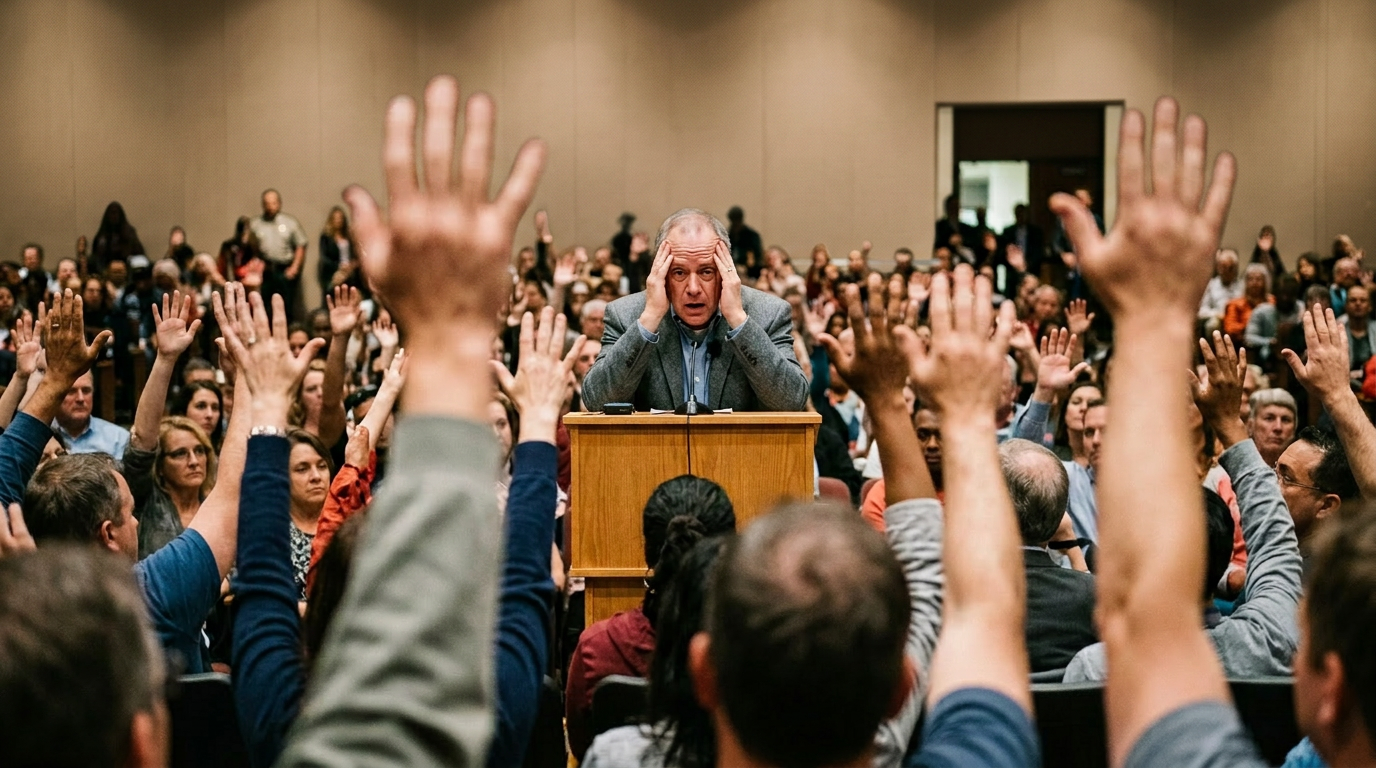
The conversations happening in private—and what they reveal about your organization
Every workplace has two conversations.
The first happens in meetings, town halls, and company-wide emails. It's the conversation everyone hears.
The second happens over lunch, in private messages, and on the drive home. It's where employees ask the questions they don't feel comfortable asking out loud.
Will AI eventually replace my job? Is another reorganization coming? Why was that promotion handled that way? Is leadership really listening, or have they already made up their minds?
For HR leaders, these unspoken questions matter just as much as the ones employees actually ask. Because what people hesitate to say often reveals more about an organization's culture than what they openly discuss.
Why Employees Hold Back
Most employees don't stay silent because they aren't curious. They stay silent because they're calculating risk.
Will asking this question make me look disengaged? Will it affect how my manager sees me? Will anything actually change if I bring it up?
When people aren't confident those questions have good answers, they often choose not to ask them at all.
Silence shouldn't always be interpreted as agreement. Sometimes it's simply self-protection.
The Questions Beneath the Questions
The specific topics may change from one organization to another, but they often point back to the same underlying concerns.
Employees want to understand:
- How decisions are really made
- Whether career growth is realistic
- How new technologies like AI will affect their future
- What leadership isn't saying about organizational changes
- Whether feedback actually influences decisions
These aren't just operational questions—they're trust questions.
HR's Opportunity to Listen Differently
Most organizations rely on surveys, focus groups, and listening sessions to gather employee feedback. Those tools have value, but they don't always capture what people are reluctant to say.
Sometimes the better question isn't, "What are employees asking?"
It's, "What topics seem to come up everywhere except in formal conversations?"
Patterns in exit interviews, manager coaching sessions, onboarding conversations, and informal discussions often reveal concerns long before they appear in survey results.
HR's role isn't simply to collect feedback. It's to recognize what employees are trying to communicate—even when they aren't communicating it directly.
Building a Culture Where Questions Feel Safe
Employees don't expect leadership to have every answer. They do expect honesty.
Organizations build trust when leaders explain decisions, acknowledge uncertainty, and create opportunities for genuine dialogue rather than carefully managed communication.
When people believe difficult questions will be met with openness instead of defensiveness, they're far more likely to raise concerns early—before frustration grows into disengagement.
Creating that kind of culture takes intention, but the payoff extends far beyond communication.
Final Thought
Every organization has questions employees aren't asking.
The goal isn't to eliminate uncertainty. It's to create an environment where curiosity is welcomed, difficult conversations are possible, and employees feel safe bringing forward what matters most.
Because the questions employees keep to themselves often tell HR exactly what it needs to know.
Share:
The Employees Who Shape Your Culture Probably Don't Have "Manager" in Their Title
The Quiet Cost of Organizational Memory