



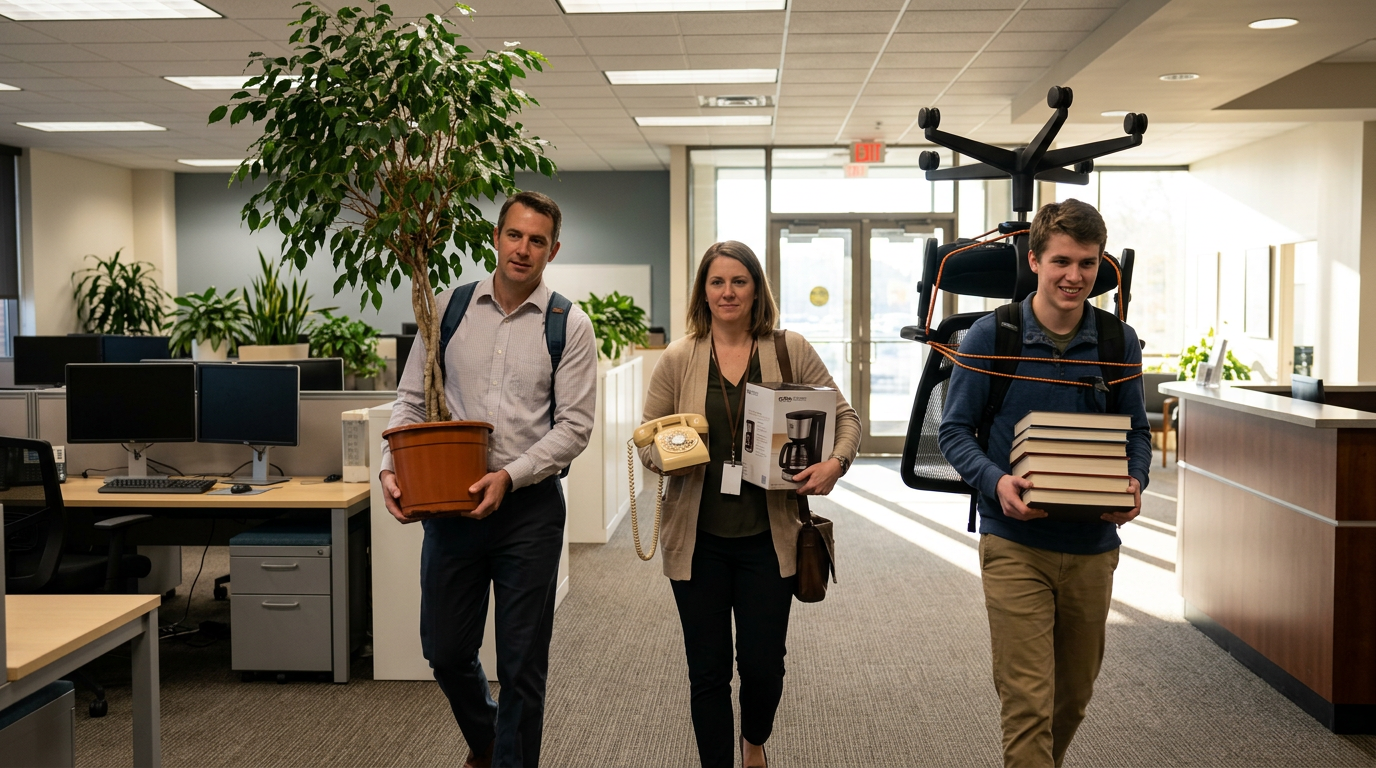
What walks out the door when experienced employees leave
When an experienced employee leaves, organizations usually focus on the obvious loss—the open position, the hiring process, and the work that now needs to be redistributed.
But those are only the visible costs.
What often goes unnoticed is everything that leaves with them: the relationships they've built, the shortcuts they've discovered, the context behind past decisions, and the countless pieces of knowledge that were never written down because everyone assumed they'd always be there.
For HR leaders, organizational memory may be one of the company's most valuable assets—and one of its easiest to overlook.
Knowledge Isn't the Same as Experience
Most organizations do a reasonable job documenting processes. Policies are written. Procedures are stored in shared drives. Training materials are updated.
But documentation only captures what to do.
Experience teaches people how to do it.
It explains why a certain customer prefers one approach over another. It reveals which departments need extra context before a project begins. It helps employees recognize problems before they become crises.
That kind of knowledge isn't found in a handbook. It's built over years of experience.
The Things No One Thinks to Document
Organizational memory often lives in places no one considers until it's gone.
Experienced employees know:
- Which processes look efficient on paper but rarely work in practice
- Who to call when a problem doesn't fit the standard process
- Why previous initiatives succeeded—or failed
- How different teams prefer to communicate and collaborate
These insights rarely appear in job descriptions or transition plans. They're simply passed from one person to another over time.
Until they aren't.
Why This Matters More Than Ever
Today's workforce is changing quickly. Retirements, internal promotions, career changes, and shorter employee tenures mean organizations experience knowledge loss more frequently than they did a generation ago.
At the same time, many companies are adopting new technologies and automating processes.
Technology can improve efficiency—but it can't replace organizational wisdom that was never captured in the first place.
The faster organizations evolve, the more intentional they must become about preserving what they've learned along the way.
HR's Opportunity to Preserve More Than Processes
Knowledge transfer shouldn't begin after someone gives notice.
HR can help leaders think more proactively by encouraging mentoring relationships, documenting lessons learned after major projects, and creating opportunities for experienced employees to share not just procedures, but perspective.
Even simple conversations can preserve valuable context:
"What do you know today that you wish someone had told you when you started?"
The answers to that question often become some of the most valuable knowledge an organization possesses.
Final Thought
Every organization accumulates knowledge over time.
The question is whether that knowledge belongs to the company—or only to the people who happen to work there.
For HR leaders, protecting organizational memory isn't about preserving the past.
It's about making sure the next generation of employees doesn't have to learn the same lessons all over again.
Because one of the most expensive things an organization can lose is something it never realized it had.
Share:
The Questions Employees Wish They Could Ask Leadership
What New Employees Notice That Veterans No Longer See